

As a business owner in the women’s wear fashion niche, you use Instagram to promote your products. One day, you wake up to a post that has gone viral. Comments are pouring in, shares are skyrocketing, and your notifications are non-stop. However, by evening, the initial excitement fades into a troubling question: where are the customers? Despite the thousands of reactions, not a single person has inquired about pricing, booked a call, or placed an order.
This scenario highlights the hidden cost of rage bait. Rage bait refers to content deliberately designed to provoke anger or outrage, prompting people to comment, share, and react. Understanding this phenomenon is essential for any Nigerian business looking to grow its sales and visibility without harming its reputation.
I’ve experienced something similar with one of my LinkedIn posts, which garnered thousands of engagements after a month of posting. In the end, all I had to show for it was high impressions and engagement, but no actual results.
What Is Rage Bait? A Simple Definition
Rage bait is essentially content designed to provoke anger or strong reactions from viewers. Unlike informative or persuasive content, creators of rage bait aren’t aiming to enlighten or help; their primary goal is to trigger those intense emotional responses. The idea is that when something raises our blood pressure, the one I’m currently managing so that we’re more likely to engage with it, whether that means commenting, sharing, or just clicking through.
In Nigeria, this concept has become so relevant among the Gen Z crowd and in business discussions that Oxford University Press recognized “rage bait” as its Word of the Year for 2025. This acknowledgment highlights a significant shift: rage bait is not just a tactic used by a few online personalities anymore; it’s now built in the daily social media experience for many.
Rage Bait vs. Clickbait: What Is the Difference?
The two are related, but they pull on different emotions.
| Clickbait | Rage bait | |
| Emotion targeted | Curiosity | Anger or outrage |
| Typical tactic | Teasing headline that withholds the answer | Inflammatory claim or deliberate provocation |
| Desired action | Click | Comment, argue, share |
| Main risk to a brand | Disappointed readers | Lost trust and a damaged reputation |
Clickbait makes you wonder, while rage bait makes you react. Both manipulate attention, but rage bait carries a heavier risk for brands because the audience it gathers is often hostile.
Why Rage Bait Works on Social Media Platforms
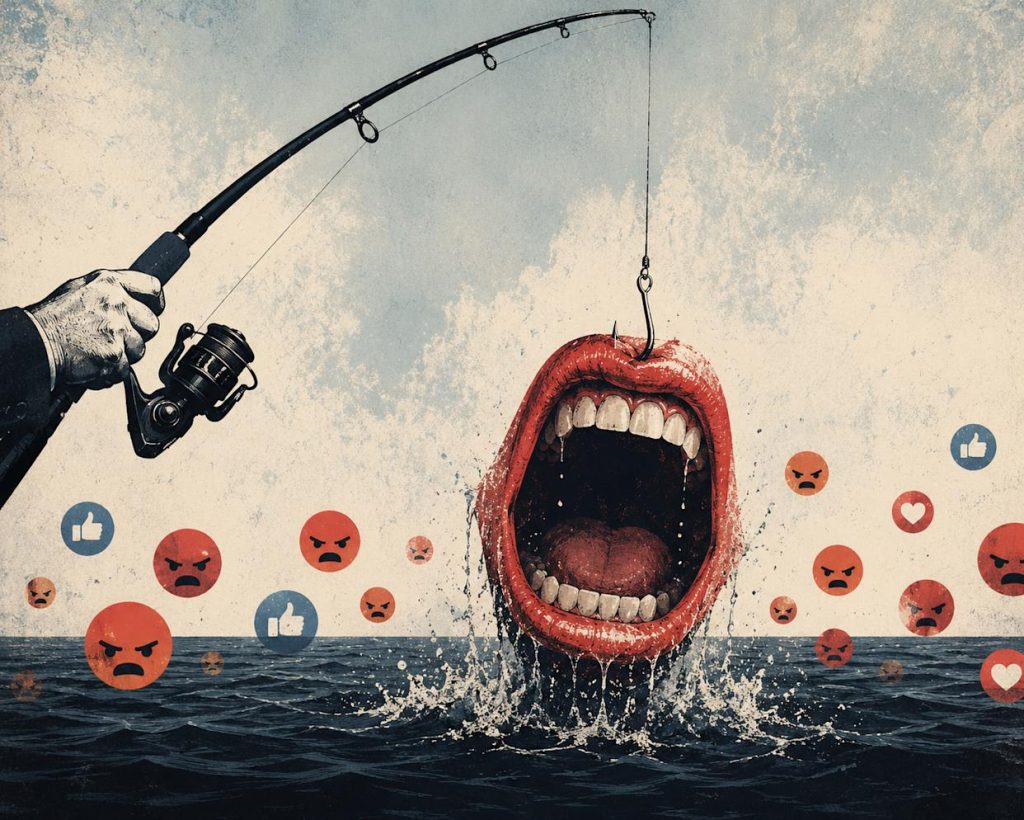
Social media platforms typically reward engagement signals like comments, shares, and the amount of time users spend on a post. The algorithm does not differentiate between a positive or negative comment; it simply registers that people are responding and, as a result, shows the post to more users.
This explains why provocative statements often spread much further than well-researched, thoughtful ones. Anger is quick to ignite and encourages people to take sides. Many content creators have discovered that a single heated post can generate more interaction than weeks of helpful content, measured in raw numbers. To better understand how platform behavior is evolving, you can refer to our article on AI trends for valuable insights.
Common Examples of Rage Bait
You will recognize these patterns even if you have never heard the term “rage bait” before. Without reproducing any specific examples here, these are some of the most common forms:
- Inflammatory hot takes: Sweeping statements about groups, professions, or lifestyles designed to provoke people into defending themselves. Techpoint Africa recently reported that some Nigerian creators deliberately post controversial takes on marriage, tribalism, and trending news to generate floods of angry replies, since X rewards posts based on impressions. The report also stated that, in February 2026, X’s AI flagged nearly 80% of Nigerian creators for suspected engagement manipulation, resulting in frozen payouts.
- Staged arguments: Exaggerated or scripted confrontations presented as spontaneous events another concrete rage bait that are seen on social media platforms today. For example, Iyke reportedly admitted to orchestrating a heated confrontation with Maduagwu to promote his 2021 film, Bad Comments. After spending more than ₦20 million on promotion without achieving the desired results, he allegedly paid Maduagwu to participate. The incident became one of the most viral examples of rage bait, provoking widespread public reaction before many people realized it was simply a promotional tactic.
- Deliberately false or misleading claims: Statements that are knowingly inaccurate and designed to make people rush to the comments to correct them. Recently, a viral video appeared to show popular Nigerian musician Idris Abdulkareem confronting Seyi Tinubu over the alleged failures of his father’s government. It was later confirmed that the video had been digitally altered, with audio from one of the rapper’s performances overlaid on unrelated footage.
- Polarizing “who is wrong?” posts: Content that forces people to choose sides in a conflict, often by presenting a one-sided version of events. A clear example is the controversy surrounding Seun Kuti’s comments about Wizkid and Wizkid’s response, in which he claimed to be bigger than his father, the legendary Fela Anikulapo-Kuti. The online community quickly became divided over who should have shown maturity and who was responsible for taking the argument too far.
In every example, the content works only because people become angry. Remove the anger, and little or nothing remains.
Why Rage Bait Is Risky for Nigerian Brands
It’s tempting to copy what seems to be working. A competitor posts something controversial and the numbers go up and it looks like a hack. But there are three serious problems for a business.
Rage bait attracts arguers, not buyers. The people who jump in a fiery comment section are rarely the same people who open their wallets. You may get an impressive amount of reactions and a very low amount of leads.
Secondly, it destroys trust with the most important clients. Regulated institutions and senior decision-makers are watching how a brand behaves in public. Corporations, A CEO or HR director looking for a training partner will quietly back away from a brand that appears to thrive on conflict. The Bible puts it this way: “A good name is rather to be chosen than great riches” (Proverbs 22:1). Reputation is an asset in business; it takes years to build and one afternoon to lose.
Third, the harm is difficult to undo. Screenshots are forever. A post designed to stir a fuss could be the first thing a prospective client sees when they search your name.
How to Spot Rage Bait Before You Engage or Share

Every time you share or react to rage bait, you feed it. A quick check can protect both your time and your brand. Ask yourself these questions before you respond:
- Is the post written to make me feel angry rather than informed?
- Does it lack a credible source, or rely on a single dramatic claim?
- Does it push me to pick a side immediately?
- Would the creator benefit if I commented, even to disagree?
- Is it using a real tragedy or a sensitive subject to win attention?
If you answer yes to two or more, you are very likely looking at rage bait. The best response is often no response at all.
What to Do Instead: Building Engagement That Leads to Sales
Avoiding rage bait does not mean being boring. It means choosing engagement that builds toward something. Three approaches work especially well for Nigerian businesses:
- Story: Share real experiences, such as a customer problem you solved or a lesson you learned the hard way. People remember stories long after they forget arguments.
- Useful insight: Teach something your audience can apply today. Helpfulness earns trust, and trust earns sales.
- Honest debate: There is a difference between provoking people and inviting them to think. Ask a genuine question about your industry and welcome different views with respect.
These approaches may grow more slowly than a viral outrage post, but they attract people who are ready to listen, to trust you, and eventually to buy.
Frequently Asked Questions
Is rage bait the same as trolling?
Not exactly. Trolling is usually done by individuals to disrupt or upset others for amusement. Rage bait is often more calculated, because it is created to earn engagement, reach, or income. The two can overlap, but rage bait is typically a content strategy.
Is rage bait illegal?
Rage bait itself is generally not illegal. However, it can cross the line when it involves defamation, hate speech, harassment, or deliberately false claims that harm others. Businesses should also remember that platforms can penalize or remove such content.
Does rage bait help SEO or sales?
It can raise short-term attention, but it rarely produces qualified leads or lasting customers. Search engines and buyers both tend to favor trustworthy, helpful content over time.
How can a brand respond if it is targeted?
Pause before replying, gather the facts, and avoid feeding the argument. Respond calmly and briefly where a response is needed, correct false information with evidence, and involve your communications lead before the situation escalates.
Conclusion: Choose Trust Over Noise
Rage bait will continue to trend because it easily triggers anger and is simple to measure. However, a successful business is built on relationships, credibility, and consistent value, not just on reactions.
The brands that succeed in Nigeria’s expanding digital landscape will be those that attract attention without resorting to manipulation. While noise may fade, trust only grows stronger.
If you want your team to create content that effectively boosts sales and visibility, we can assist you. Book a consultation or inquire about our corporate training programs.
PS: Have you ever seen a brand lose customers over one provocative post? Tell us what happened in the comments.